Showing posts with label Tips and Tricks. Show all posts

Friday, July 27, 2018

The Transformation Equation - The dynamics of how I did it, and how you can too!

Carb Loading?
1299 Days, 14 hrs, 24 minutes, 53 seconds. The time that has elapsed since the day I looked in the mirror  and felt disgusted with myself. The moment I thought "What have you done?" And the day I started out on my quest to lose weight. I had no idea how long or how far I could or would go. I told myself this was the time, and no matter what I was not going to give up! To this day I have held myself accountable to that promise!


I watched a video once that related losing weight to holding a stretched elastic band in your hands out in front of you, and I have always remembered that. Something about it stuck with me. At first it's easy to hold onto but as time goes by the tension becomes harder and harder to hold, until eventually you cant hold it any longer. If you're reading this because your looking for guidance, you need to be ready for this moment. This will be the moment when you really feel like giving up.  The moment where you may wonder why you started in the first place, or why you should continue. This moment will probably happen multiple times over the course of your journey and it is in learning how to deal with this moment that will determine your success or failure. For me this moment comes in the form of diet cravings. I hold out for a long period and then cant hold back anymore. I go into frenzies of post workout face stuffing, almost uncontrollable binge eating, where I will smash thousands of calories of junk. Not because I'm hungry, just because holding back for so long builds up inside. I have found a way to use this to get cravings out of the way. I almost embrace these moments. I let them happen, wake up the next day, go for a long run, or a long bike ride and then go to the gym. I get back on track. For that brief period its 2 steps forward one step back. But I always try to keep forward momentum.

For me that moment looking in the mirror was the driving force that kept me motivated day after day. I always remember how gross I felt, and why I started and it keeps me strong. The moment that really changed everything was when diet and exercise became not a choice that I made, but a lifestyle that I lived. So if you're reading this thinking the changes I made sound so easy, they are. It's the sticking with it for hundreds upon hundreds of days that will be true test of determination!

Before we start, I should state that I am truly like a pet pig. I LOVE FOOD! I ate not because I was hungry but because I loved eating, and tasting and drinking. If there was food around you can bet that I was going to get in on it. As I soon found out that eating this way is like using your credit card - you can have it now, but eventually the bill comes and you gotta pay up - everything has changed and I have now had to learn to control my eating and this has by far been one of the biggest challenges I have faced.
 
The initial changes I made were easy, splitting my food up into 6 meals a day using protein shakes and high protein foods to keep me feeling fuller for longer. I had an active job in the oil patch so I wasn't too concerned about calories at this point. I headed down to the local gym and bought a membership and started doing cardio 3-5 times a week for 30-45 minutes and some strength training a couple times a week. My extra pounds started falling off. But this wasn't enough. I ended up downloading a calorie tracking program and tracking all my foods making sure I was eating enough of each macro nutrient (proteins, carbs and fats) .

The Cheat Day, "Breakfast of Champions!"
At this point I was still taking "cheat days" where I would binge eat pizza and burgers and cookies and basically everything I could fit in in one day. This helped fight off the cravings for junk food, and allowed me to stay on track. It worked for quite some time until I hit a plateau at 225 lbs. At this point I hired a personal trainer and started hitting the gym with vengeance. She helped me with workout plans and got my diet on track, with the exception of my "cheat days" which still happened a little too often.

The Beginning of every Week!
It wasn't until I cleaned up my diet completely that I saw the next few pounds leaving, this took a lot of effort, I had to cut sugars, beer, most processed foods, and worst of all, the cheat days I loved so much. Every Sunday without fail, I would spend hours in the kitchen prepping all my food for the following week. I would portion, weigh and package everything for convenience. I had to turn down BBQs at work and instead go to the lunchroom and eat my chicken and veggies.

Now, I had goals this year to run three ultra marathons, stepping my way up to a 70 miler in August. Because of this I had to make exceptions to my diet. The first few weeks of running I could sustain myself on fruits but as my runs progressed to longer distances and times, I had to add some sugars back in on long run days to fuel my workouts. I managed to get my weight down to 195 for my 50km race but got a little scared after this race thinking I was still a little too big. I hadn't been using my calorie tracker for a year and a half as I had been prepping meals and eating the same thing day in and day out, but decided that I now needed to be extra strict in the following weeks coming up to my 80k. I continued meal prepping and tracked every single calorie I ate. I searched the internet for the best macro split until I found one that I thought would work (40% carb, 30% fat, 30% protein seems to work well for my body type - this breakdown may not work you). I set it up and ate to it right up until race week. I stepped on the scale and I was 185.4 lbs pre-race.

Chances are you have heard of (or tried) one of the many diets boasting rapid weight loss by taking some miracle pill or drink, or workout programs promising rapid results. I'm here to tell you there is no miracle and there is no quick way to lose excessive weight in a healthy fashion. There is only motivation, dedication and determination.

I get asked for advice a lot on how to go about losing weight. So I figured I would put forth the basic principles here. Now to clarify I am not a nutritionist or a trainer; the following is compiled from my own personal experience and articles that I have read.  Losing the amount of weight that I did was  the biggest challenge I have ever faced in life. It requires a serious long term commitment to yourself and, if you can turn it into a healthy lifestyle like I did (I still struggle with pizza and beer) then you should be able to obtain lasting results!

So lets start at the beginning. You! You are the person responsible for getting to where you're at. Take a good look in the mirror for a minute and own that. No one else is responsible for your extra pounds, your pizza binges, your late night McDonalds runs, but you! You ate the extra calories and skipped the gym one to many times. Now it's time to pay up!

Ok so now you have accepted responsibility! So we can move forward. If you want long lasting results, you must embrace these changes as lifestyle changes. Every choice you make must be towards your goal. If your goal is to diet temporarily, chances are you will regain the weight shortly after (I've done this multiple times in my life). It will not be easy. After being free to eat whatever you want whenever you want, a diet can seem restrictive and impossible at times. It's these times you have to remember where you started and where you want to be and keep moving towards it.

You need to understand and realize that it will take time.  For your body to burn excessive fat you still need to eat lots of good healthy food. If you deprive your body of the proper nutrients, it will just break down lean muscle mass, and as a result you will burn less calories in a day, shut your metabolism down, and kick your body into fat storing (starvation) mode.

So chances are, If you're still reading this far, you have a few extra pounds you’ve been wanting to get rid of. Or, maybe you're just bored and sitting at home and stumbled across this awesome web page about crazy people who run mountains (for fun) then clicked your way into this blog :) either way here’s how the magic happens:

 -Calories matter! 
You can break down a very complex subject into very simple math.. 3500 calories = 1 lb
-If you eat an extra 3500 cals - gain 1 lb
-Cut out or burn 3500 cals -lose 1 lb
(Sounds Simple right?)

* I should take a moment to clarify here, you get a choice of what you eat, you can eat your calories in chocolate and soda if you really want but you're probably not going to feel very good at the end of the day, Foods like chicken breasts, veggies, sweet potatoes and berries are low in calories and are way better choice to fill your daily caloric intake *

Your body has a number of calories that it burns by just existing. You can do a quick search and find a basic calculator for this. Here's one that I like using https://www.bodybuilding.com/fun/total-body-strong-calories-and-macro-calculator.html . Once you have this number you can decide on how many calories to cut out. Most of the calculators have an activity level set into them. Do not lie about the amount of exercise you do. The standard for safe weight loss is commonly said to be 1-2 lbs a week but I find 2 lbs to be cutting an excessive amount of nutrients causing me to feel tired all day long.  So that being said, I recommend no more than a 500 calorie deficit to start. This would give you 1 lb a week of healthy fat loss, while still allowing you to eat enough healthy food to not starve or feel empty all the time. For this process to work you can’t lie to yourself or guesstimate how many calories you're eating. Download a tracker, get a food scale, and hold yourself accountable for what you're eating. If you can't be bothered to put in the work, don't expect the results. 
 
A great way to start is to take your daily calories and divide it into 6 meals. This allows you to be eating all day and not having large gaps in between meals.  Eating high protein foods will keep you feeling fuller for a longer period, avoiding the spikes that come with high sugar loads. Some examples of meals/snacks I've used and still use.
Typical dinners/lunches:
1. Chicken breast (150 grams), sweet potato (100 grams),  mixed Asian style veggies (140 grams)
2. Baked salmon (150 grams), avocado (60 grams), steamed veggies, (140 grams), rice (140 grams)
3. Basa Fillet (150 grams), sweet potato (100 grams),  mixed Asian style veggies (140 grams)
4. Kale salad (no dressing, 200 grams), chicken breast (150 Grams), balsamic vinegar  (2tbsp)

*I use Frank's Red Hot Sauce and chili flakes on most dinners and lunches as it caries a nice 0 calorie balance and adds some kick and flavor. Also if you're wanting to up your fat intake 5-15 mls of extra virgin olive oil can be added as well. I have done this lots, but keep in mind that fats are calorie dense so if you're not careful you could be adding a lot of calories to your plate*

Breakfasts;
1. Oats (140 Grams cooked), Mixed berry or blueberries (140 grams), 1 scoop whey protein
2. Egg whites (140 Grams), ground chicken/turkey (100grams)
3. Whole grain toast(2 slices), all natural peanut butter (50 Grams)
4. Oats (140 grams cooked), dates-pitted (40 grams), almonds natural unsalted crushed (20 Grams)

Snacks
1. Whey protein (1 scoop), 20 grams of almonds, apple-gala (approx 150 grams)
2. Mixed berry smoothie - whey protein (2 scoops), almond milk (500 mls), mixed berries/blueberries (2 cups/280grams) 
3.  Low fat yogurt (60 grams), banana (approx 145 grams), whey protein  (1 scoop)
4. Watermelon (280 Grams), almonds (20 Grams), whey protein powder (1 Scoop)
5. Chocolate peanut butter banana smoothie: whey protein (chocolate 1 scoop), almond milk (250 mls), banana (approx 70 grams), all natural peanut butter (1-2 tbsp)  

These are all just examples of the types of meals and snacks I use throughout the day. I usually eat 6-7 times. Every person has different tastes and different requirements and this is why planning is everything. Take the time to create 6 or 7 days worth of meal plans to keep it interesting. It only takes a couple hrs to put together, plus shopping is way easier. Here is a link to a food calculator that allows you to put multiple items in: https://caloriecontrol.org/healthy-weight-tool-kit/food-calorie-calculator/

As far as macros go, everyone has a different tolerance to different levels of each macro nutrient (proteins, fats and carbs). Our body types are all different so what works for me may not work for you in terms of what your body needs. Some people have a high metabolism and can eat a higher value of carbs in a day while others have a slower metabolism, and may need to cut back on carbs to lose weight. I recommend doing a quick test for your body type and setting up your macros based on that as a starting point, and then fine tuning it later. Here is a link to a test that can help determine your body type, and also has some great basic information on the 3 main body types
https://www.bodybuilding.com/fun/becker3.htm

Myfitnesspal is a great App/Website to use since it allows you to set macro nutrient goals, and it's easy to adjust the percentages to fine tune your daily values. It may take some time to get used to, but in the end knowing what you're eating can greatly affect the way you eat, and your views on what you're actually getting from your favorite foods.
    
Even if you don't want to do full on meal prep, planning ahead, calculating, pre-weighing and measuring out foods into containers makes it easier to stay on track during the week even with a busy schedule. Make your diet easy and stress free so that you stick with it.

     
Don't let others influence you. It's your body. It's your goal! If you give into the pressure from friends, family or coworkers, you are only setting yourself back. If you always give in, you will derail your own efforts and inevitably give up because you're not getting the results you wanted.

Diet really is the key to success but exercise is also important, even 20-30 minutes 3-5 times a week of cardio can help a lot. And don’t rule out strength training if hitting the weights is something you like doing! By all means, lift all the weights... just don’t pig out on pizza afterwards!

Anyways, that is how I did it, and the fundamentals of changing your lifestyle. Keep in mind the internet is a great resource for information if you're looking for more in-depth information about macro splits or counting calories. I have used MyFitnessPal and Lose It (both good programs) but there are lots more out there, and most have a free option with all the features to get you on the road to success!

Also a huge thanks needs to go out to my beautiful fiancĂ© Robyn, who helps me every weekend with my monster food prep program.  And to all my friends, family and co-workers whose positive words and encouragement kept me and keep me going to this day.  I love you all and couldn’t have done it without you!

My journey is not complete and maybe never be as I continue to push on and see just how far I can go.  So get on with it and never look back!! Thanks for reading!
Cheers!  BigBearRunning!

Saturday, May 13, 2017

The curse of pointy heels: Modifying shoes for Haglund's deformity

First off, Haglund's deformity is an extra bony growth on the heel, typically a little lateral to the Achilles tendon. It is not to be confused with a heel spur which is under the foot. A technical definition of Haglund's deformity would be an abnormal prominence of the posterosuperior border of the calcaneous.

If you have this heel bump you may not have known the name, but you would have certainly felt it! It would have rubbed on your shoes and gotten inflamed, or maybe you repeatedly wear through the back of your shoes on the inside. Luckily, there is surgery available to correct this if it's really bothersome. The inflammation, a bursitis of the back of the heel, is called Haglund's syndrome. It's thought that the inflammation actually leads to the bony growth, not the other way around. Nonetheless, the rubbing and pain is worst in shoes with rigid heels.
Haglund's deformity *not my foot*

Since I figured out I was a little abnormal in 2013 (I can't believe it took that long either...) I've been modifying my shoes so that I don't wear out my heels or the backs of my shoes. I have two methods for this. The first method is to simply cut a hole in the back of my shoe where the growth on my heel is. This works, but it isn't pretty and wouldn't work well for trails. I've only done this modification once, on a pair of road shoes where the inside fabric was already wearing through (see below). Be careful with cutting through the hard plastic - I found cutting pliers can be useful, along with an x-acto knife/scalpel.

Method 1 - cut a hole and leave it open.
Sew around the edge if you want.
The second method has proven quite reliable and comfortable, though it involves a little more work. I cut in through the back of the shoe, snip out some of the hard plastic making sure to keep the inner fabric intact, then sew up the incision site. Step by step instructions follow below where I cut into a new pair of Altra Lone Peak 3.0's.

Keep in mind this may decrease the stability of the shoe. Also it will void your ability to return the shoes, which is a bit of a problem since this modification is best done when you first get the shoes and the inside fabric hasn't been worn at all.

Step 1 - draw on your cut.
Step 1 is to figure out where you're going to cut. For me this is a little lateral to midline, and about the middle third of the height of the shoe (2cm). At the top and bottom of this we need to cut left and right about 1 cm, making an "I". Ideally, the top incision should be just at the top of the hard plastic inside - you can feel this by bending the top of the heel of the shoe.

Step 2 is to cut! Cut in so that you get to the plastic, but don't go through it into the inner fabric.

 
Step 2 complete, ready for Step 3. White is plastic with
glued on layer of fabric.
Step 3 is to remove the plastic. Take care to separate the inner fabric from the plastic if it's glued on, that way you don't damage it. Use your knife or your snipping pliers to remove a "U" shaped piece of plastic approximately where your heel deformity is. Make sure the piece you're taking out is as large or larger than your bump.

Step 4 is to double check that enough plastic has been removed and in the right spot. So, put on your shoe and lace it up. Feel the back of the shoe for your heel bump relative to the area without plastic. If they don't line up or there is still some plastic rubbing your heel, take that out too.

All done. Not pretty, but it works!
Step 5 is to close it up and sew the flaps together. To ensure the flaps don't rip open I use upholstery thread (Tex 75) as it's super strong, though I'm sure normal thread would work too. As I'm sewing, I only go through the outer layers to keep the inner layer intact; this seems to do the trick. A pair of pliers can be handy if the shoe material takes a lot of effort to punch through with your needle/thread combo, just make sure to use non-cutting pliers! Also, to save time, only sew the vertical cut as the horizontal ones don't seem to matter much.

Now get out there and run!

Tuesday, April 8, 2014

Pacific Spirt Park Pocket Trail Map

When I first started running in Pacific Spirit Park I had no idea where I was going! That's why I made a pocket trail map so I wouldn't get lost. I still got lost once after that, but only because I didn't have my trusty trail map of Pacific Spirit Park!

Here is a copy of my pocket trail map so that you too can stay safe in the forest. Just remember to have it with you!

You can download a high-quality pdf version here. Just print it out, cut around the outside, fold in half and tape (for water protection)!

Always remember to run with a buddy and have a cell phone for safety.

Happy Running!

Thursday, April 3, 2014

Recommended Read - Relentless Forward Progress

Relentless Forward Progress: A Guide to Running Ultramarathons by Bryon Powell is a great read for both beginners who are just plain bored of marathons, and those looking for tips and tricks to help them through their next race.It includes stories from well known ultra runners, training schedules for different length races, tips on what gear to carry, how to keep properly fueled, and how to deal with common injuries!

To encourage you to read the book, I'll only share with you a few things I enjoyed, as well as a few links you might find useful.

Reasons why you should read this book:
1. It makes running ultras more approachable to everyone. How many times have you had someone look at you like you're crazy when you tell them how far you run? Then you tell them they could do it too and they don't believe you. But here it is in writing: It's okay to walk in ultras too, its just one big adventure, so what's stopping you from getting out there?!
2. This paragraph: "There will be trying times in an ultra, but enjoy what you can of it. Take in the scenery. Talk with friends and strangers alike. Lose yourself in thought or zone out. Marvel at your accomplishments or laugh at your foolishness. Laugh. If it's a rainy mess, jump in some puddles. If it's hot, jump in a stream. Let out a triumphant cheer at the top of a climb and a joyous holler as you fly down a hill. Be a kid. Be happy."
Does this not make you want to get out there and run?!
3.The best line in the book is "Lube it, cover it, or adjust it". Okay maybe that's not the best line, but it can save you a lot of post-race (or during race) pain!
4. It introduces the idea of endurance snowshoeing in the winter, as well as fastpacking!

Useful Links:
-The Authors website: www.irunfar.com
-General resources: www.extremeultrarunning.com (Particularly for this article if you're just getting in to ultras "The Ultimate Running Experience: Completing your First Ultra-Marathon" by David Horton)
-Feet troubles? Try www.fixingyourfeet.com

Spring has sprung! Now get out there and run happily through the mud!

Thank you Tim for passing along a great read!

-J.B. Running

Monday, March 31, 2014

From One FatDog to Another: Preparing for FatDog 2014

Tim and Chris, both previous finishers, discuss this year's FatDog 120 mile trail race, and provide insight into their training and preparations for the race, as well as a detailed description of the course and the things you need to know.
------------------------------------------------

Hey Chris looks like the FatDog Race is filling up fast. I see most of your family are coming out this year! What's that all about? Are you going to post a race report from last year?

Hey Tim, this will definitely be a big year for FatDog. Last year there were only 31 racers signed up in the 120 division, but now there’s 175! I think this increase is really a product of the success that Heather Macdonald has had with the Mountain Madness race series and how great of a race FatDog really is! Adding to that is the fact that it’s now a qualifier for Hardrock 100.
Last year my family crewed and paced with me, but this year it seems they’ve caught the bug as they’re all racing some distance of it! My dad and girlfriend are planning for the 70 miler while my mom and sister are going to do their first ultras in the 30 miler. It will be quite the weekend for my family!
Speaking of lot’s of people doing the race, what do you think about the increase in racers this year? Do you think the aid stations will be able to handle that many participants?

Tim is a previous finisher of the FatDog 120mile race

The race will be different for sure. The last couple years I’d arrive at an aid station and there was always a chair I could grab for a few minutes while I ate. Not so sure this year. Those of of us returning should be prepared for this. There’s plenty of parking for all the support groups (except maybe Bonnevier) but I don’t have a support crew so I’ll probably sit on the ground. The relay teams usually hang out at the aid stations for a while so Heather and Peter may have to manage that.
Heather has a lot of experience dealing with that many runners at her other races and she’s split the volunteer coordinator job in three. Side note: they need lots of volunteers. I’ve been emailing friends and family encouraging them to race and/or volunteer.


That’s a good point Tim, the race will need a huge number of volunteers this time, especially if they want to have a repeat of the amazing aid station service we received last year. The aid station volunteers were definitely one of the highlights of the FatDog race. That’s reason enough to come back, never mind that the course is stunning, almost all on trails and passes through four different parks!

I love the race. It has more single track (as a %) then any 100 mile I know. And an awesome finish area. I was looking around for other 100 milers with as many mountains and single track but didn’t find much. Let me know if you find one. A lot of them say ‘trails’ when they mean a combination of single track and jeep road. I think death race and sinister seven are mostly jeep track. From a safety viewpoint it makes sense to use jeep tracks, but the running isn’t as enjoyable.
I have less time to train this year and I’m worried about that. Last year I was putting in 100km weeks with lots of elevation. This year I’ll focus more on quality elevation runs and hope to find enough time.


I definitely agree with the idea of quality over quantity when it comes to training. This year I’m hoping that I’ll be able to increase my training to be better prepared for the hours-long uphills that FatDog is famous for.
What are your plans for race day?


Not much yet. A couple years ago Randy gave me a tip to put my drop bags in waterproof bags. That way I am guaranteed that the gear will be dry when I get there. As much as I trust the volunteers to take care of it, you never know.
I’ve also been thinking about small things, like when to carry sun glasses and sun screen. Since I wear a hat, I’ll only want sun glasses between Ashnola and the river crossing. A big to do item is to figure out shoes. I’m currently running in Salomons and Hokas from NSA (NSA is a big sponsor of the race). I need to buy more pairs of both.
Food planning will come later but I know there will be plenty of salami, fried beets and V8 juice. I get pretty sick of sweet stuff about halfway through the race. If I know anyone at the aid stations then I’ll ask them to bring hard-boiled eggs and sausage. I also like kale chips. Last year I tried doughnuts and chocolate coated bacon; they were both too sweet. I plan my own food and do the spreadsheet thing to count the calories. I ended up with lots of leftover food as I didn’t account for all the good aid station food. I’m now going to assume I eat at least 100-200 calories at most aid stations. How about you?

 
In terms of food, I’m very much the same way as you Tim. I prefer to go for some of the more salty and savory foods early on in the race, saving the sweet stuff for when I need that kick. Although I don’t think I’ll be eating salami during the race, I really do enjoy cheese quesadillas, so fingers crossed they’ll have those again (thanks Andrew Knowles for making those at Heather aid!). I’ve also been experimenting with making my own energy bars which have had positive results so far.
Planning drop bags for FatDog is definitely not an easy task. With the limited number of spots for drop bags along the course I found myself carrying gear for quite a ways before or after I finished using it (e.g. sunglasses after dark or headlamp before dark). There’s really not much a runner can do about that though, other than plan and pace accordingly.
Figuring out shoes was my number one priority after last year’s FatDog race. Having sustained massive blistering on my toes by about the 90 mile mark, I was reduced to a slow march for the remaining 30 miles (all the glorious details in my FatDog race report part 3). So this year I’ll be using Altra shoes with Injinji toesocks. I think this combination will give me what I was lacking last year - space in the toe box with adequate tightness around the heel and midfoot. Plus the toe socks should stop the toes from rubbing against one another.
The blister issue gave rise to something else unexpected. The pain and the resulting pace meant I was out on the course for hours longer than anticipated, and that meant I was getting more and more sleep deprived. 36 hours into the race I was completely exhausted and had to take a 15 minute nap on the trail (not recommended due to bears/cougars). I had to repeat this at Camp Mowich and Skyline Junction aid stations. This year I’m hoping that with better shoe/sock choices and more training I will be able to avoid the whole sleeping thing altogether. What’s your take on sleeping during a long race like FatDog?

 
Is that why Ultra signup is predicting you'll come in 10 hours faster than last year! Interestingly, it also predicts that I'll come in 3 minutes slower than last year.
I’ve realized that I won’t sleep in a race, so I’m not going to try. As long as I get a good sleep the night before.
It’s good that you’re planning to avoid the naps, though we all loved the silver-superman look you were sporting at the end last year. (to the reader - you should check out the video from last year)
What’s your favorite part of the race? I love the four mountains we go over and the views are wonderful. Looks like it will be a week after the full moon so we won’t have much moonlight.


My favourite section(s) of the race is the alpine meadows for sure! As you go over the mountain peaks the variation in trail, flowers and views is spectacular. Also, the Pasaytan River crossing was refreshing and surprisingly fun since I hadn’t done that before!

Yea, the crossing is pretty easy and last year Don had his BBQ going on the other side with hot dogs. Hey, we should probably talk about the route as there’s a lot of people coming from out of town. Some of the blogs do an ok job but you and I may have a different take on it.


Section 1, Start to Ashnola: The climb is straightforward enough. There’s a couple boggy sections so don’t get your feet wet. Then you pass the first aid station (only water available in Section 1) and you quickly reach alpine and you’re running on boulders over the shoulder of Red Mtn. The descent is pretty smooth with a nice grade; overall quite runnable - just don’t push it. This whole first section is single track of varying width, with some short portions of jeep road at the very beginning.

Section 2, Ashnola to Pasaytan River Crossing to Bonnevier: Leaving Ashnola it looks grim (logging road) but the climb improves and you end up in a very cool, burnt-out forest complete with babbling brook and lots of wild flowers! It’s 7km up to the Trapper aid station, then 23+ km to the Calcite station. After Trapper aid the trail is well defined until you get close to the lake, then you need to be very careful looking for markers as you make your way around the left side of the lake. Here the trail becomes less defined as it passes through a boggy section - careful or you’ll soak your feet. Once you get to the far side (~30 min around the lake) then the flagging is obvious again and you soon reach the second high point, Flat Top Mountain. The descent from there is long and has some sustained steep bits where you can use up your knee muscles if you’re not careful. There is a creek 4-6 km before Calcite, so fill up a bit if you want to. Tim is usually hot at this point and rolls around in the stream. After the creek, the descent is very mellow all the way to Calcite aid station. Last year Terry Bremner, owner of the outstanding juice company Bremner’s Juice (and a runner himself), was there to greet you and you know he had juice and fresh blueberries for us!
After Calcite it’s really fast down to the river and across then only a couple km to Bonnevier. This is the first of the 2 road sections.

Section 3-4, Bonnevier to Cascade: I group these two sections as it is the longest stretch between drop-bags. Stock up on gels and food at Bonnevier! You start climbing very slowly on a logging road then suddenly you turn left onto a trail and cross a creek (Tim filled up) and you start climbing. No more water (creeks or otherwise) until you get to Heather aid station at the top. Things are pretty minimal there; you can have a good bite to eat but don’t expect to take too many gels away. Then it’s night-time running through alpine meadows (narrow single track) with a gentle downhill for a while. The crew do a good job marking it and you’ll soon get to a cliff with lots of flagging. This is a steep, rocky descent down to Nicomen Lake (and the most remote aid station). Matt Barry will be there to greet you, feed you some chips, possibly heckle you (if he knows you), and kick you out. From Nicomen Lake it’s a long run to Cayuse Flats (you cross a few creeks along the way) and the trail is wide and nicely graded. Cayuse Flats is a good rest stop, but you should try not to stay too long as there’s a roller coaster section up next that takes you to Cascade and another drop bag. This section is surprisingly difficult following the long downhill from Nicomen, so be prepared. Cascade has lots of parking and will have lots of people to cheer you on.

Section 5, Cascade to Skyline: This Section has two aid stations along it (Sumalo Grove and Shawatum). Leaving Cascade you cross the highway and run along the pavement a few km to Sumalo. From here the trail gets pretty flat with a few ups-and-downs (one is quite steep, but short) as you follow the meandering Skagit River all the way to Shawatum. At one point you leave the side of the river and the running gets really flat. There is one water drop a few kms before Shawatum (Update: this is being removed for the 2014 race). This is where a lot of runners have their low point in the race (note the double entendre). Don’t get stuck here, just a quick stop and plan to take your rest at Skyline. The trail has a bit more variety between Shawatum and Skyline (even though the road connecting the two is dead flat) and there is one creek crossing a little ways before Skyline. The trails through this section alternate between the usual single track and some wider paths, all quite runnable if you’ve got the energy. Carl and John will be at Skyline with stacks of food. They are two very experienced 100 milers and they’ve been talking about having a stove with eggs, sausages, burritos...
You’re almost home!

Section 6, To the end: This starts with a long gradual climb. It’s technically runnable but the climb starts at mile 101 in the race so chances are you may not be up to running. The trail is in great shape. As you get up to alpine hopefully you can see the surrounding peaks so long as it isn’t dark yet. After the first peak you descend into Camp Mowich aid station (another remote aid station with chips and water). You climb up from Camp Mowich, then do an annoying drop and climb (following the ridge) up to Peter at the Skyline 1,2 junction aid station (chips, water, bananas). When you get to Peter you’re (almost) smiling cause you know it’s shorter to go to the finish line than to go back or hike out. Now it’s a few more ups and downs along the ridge until you crest the final sub-peak and it’s all downhill to the lake. This downhill starts steep and rocky, but soon turns smooth and very gradual (annoyingly gradual!). No matter what time of day, you’ll know when you get to the lake, and then it’s a short run around the lake to the finish. If you made it this far, you know you’re a FatDog!


Good luck to all aspiring FatDogs!


*****A big thanks to Tim for his amazing contribution!*****

Saturday, March 15, 2014

6 Running Tips to Keep You Moving!

These six running tips and tricks will keep you running so that you don't have to stop as often! We've covered quite the gamut in this post from running shoes and lacing tricks to injury prevention and stretching, and even some things you never considered eating during a run.
 
1. The Right Running Shoes for the Terrain
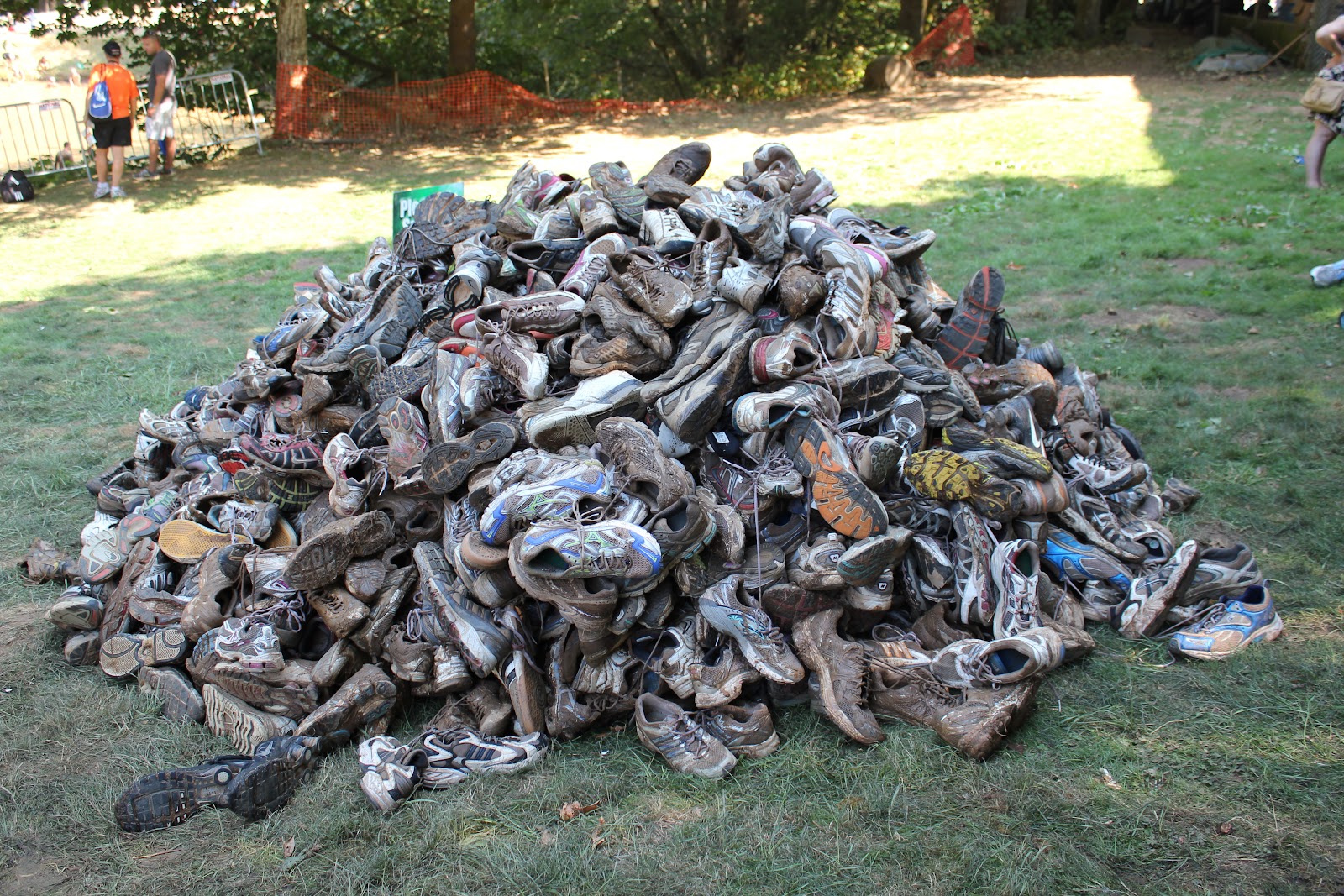
Running shoes are expensive! There is no question about that, but, to make matters worse, you may be having to replace them more often than necessary! Shoes are made with different types of rubber on the out-sole. The softness and stickiness of that rubber is designed for a specific type of terrain; harder rubbers are for running on concrete, and soft, sticky rubbers are more for trails.The issue is that using one type of shoe for all your different running can cause the sole to wear out faster than normal.
The Trail Effect Running Blog
Don't wear out your shoes prematurely - get the right ones!
For example, let's say you bought a pair of shoes designed more for trails. It has a soft rubber and some larger lugs on the bottom of the shoe. Every time you run on the road in these, the rubber will wear out faster than when running on the trails. Or conversely, you decide to run some technical trails in your road shoes. Because the sole is quite hard and smooth and provides less traction on the rocks and roots, there's a good chance you'll end up face down in the mud or rocks! OUCH!

So, although it might be painful on the wallet to buy multiple pairs of shoes at a time, it will ultimately save you money (and potential face injuries!).

TrailEffect.com - Chris Cochrane's running shoe lacing preference
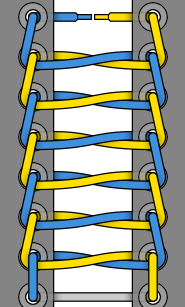
Ladder Lacing - my preferred system!
2. Running Shoe Lacing Variations 
Sometimes shoes just don't fit perfectly when you tie them up. Maybe the toe gets too tight when you cinch the upper section tight, or maybe there's a point where the laces just press in more than you'd like. Changing the way that you lace your shoes is a simple option to fix this!

There are literally hundreds of ways to lace your shoes. Ian's Shoelace Site provides a wide range of options to suit every lacing need. My favorite, by far, is the Ladder Lacing system, having adopted it for my Altra LonePeaks and my Inov8 RoadX 233's. It allows for tightening of specific areas of the foot and does a very good job of maintaining that difference during use. The only downside is that they can take a couple minutes to tighten when you put your shoes on. The Lace Lock idea actually forms the basis of the Ladder Lacing, but can be easily applied to any pair of shoes to keep them tight overall. If you've got a sensitive spot take a look at the Gap Lacing option, it might do the trick for you.

3. Runner's Lube (not what you think... well, sort of)
This is probably one of those topics that will freak some people out, but we really think it should be mentioned here. When running long distances (and sometimes not so long distances) you will be faced with chafing or blisters. Not only are these things uncomfortable, they can be quite dangerous, especially if a blister becomes an open wound!
Both issues are the result of friction between the skin and another surface or body part. And although nothing will replace proper well-fitting gear, using some type of lubricating substance on sensitive areas can make a world of difference! We're not talking that stuff you have hidden away from prying eyes (though Astroglide has been suggested in running forums), we're meaning products that are designed for running/exercise (e.g. Runner's Lube, BodyGlide or Chamois Butt'r). The good old standby, however, is Vaseline and it seems to be one of the most popular options for ultrarunners. Whatever you choose, don't forget to apply it before going running, and again partway through a lengthy run.


4. Variety doesn't just prevent boredom!
Avoid running injuries by adding variety your routine!
We all have our favourite running surface or route, but doing the same thing over and over can cause problems. Switching up your run route and/or the running surface can help you avoid injuries as well as keep you well rounded in terms of muscle strength. It's really quite simple; muscles we use grow and strengthen, while those that aren't used weaken. Weak muscles in specific areas have been linked to a number of common running problems. For example, weak quads (or mismatched medial vs lateral quad strength) have been linked to patellofemoral pain syndrome. Or, weak hip muscle have been linked to iliotibial band syndrome. By pre-emptively strengthening all your muscle groups by running on different surfaces, inclines/declines and varying your route you may be able to avoid some of these common problems.

Just remember, always adopt new running and training techniques slowly. This gives you time to strengthen the potentially weaker parts of your body and not cause injury when you're trying to avoid it. When in doubt, contact a certified trainer, your physiotherapist or your doctor - you know, someone whose job is to tell you what to do!

5. Stretching
Stretching has been at the center of controversy for quite a while. There are researchers, coaches and athletes that either swear by it or against it, but all for different reasons. Here I will present to you a good reason to stretch.
From the most up-to-date literature, and from speaking with a physiotherapist, it appears that normal static stretching doesn't do a whole lot in terms of affecting performance, and it only minimally  helps reduce soreness following exercise (we're talking 1% percent - not even really noticeable). However, if someone has tight/short muscles then stretching is recommended. A good example of this is how many people with desk jobs that are hunched over all day have tight pectoral muscles, and the solution to their problem is to stretch! Or alternately, use patello-femoral pain syndrome as an example in which stretching is usually a suggested treatment along with strengthening.

So we know that stretching can help solve problems caused by tight muscles, but wouldn't it make sense that stretching could prevent these sorts of things? The answer is yes it can! Now obviously you don't want to over-stretch as this can cause even greater issues, but holding a gentle stretch for 20-35 seconds won't do any harm! And it may even do some good.

6. Candy, Chips and Running CAN go together!
The Trail Effect Blog - Ultra Running Foods
Surprisingly not unlike some ultra aid stations!
Wait, before you go eating candy and chips on every run, read through the rest of this section!
You probably already know that your body uses energy when you run. This energy can come from different foods or energy stores and that's determined by your level of exertion and your level of fatigue. At high levels of exertion (eg. sprinting) your body relies primarily on simple sugars to help generate and replenish your energy, but at moderate levels of exertion your body uses a combination of sugars and fats. At low intensity, fat becomes more important, but it isn't the sole source of energy by any means. To top all that off, your body has a store of glycogen that it can use for energy, and this store gets depleted as you exercise at moderate to high intensities. Glycogen depletion will lead to extreme fatigue, and that's clearly not good for your race time!

For long, sustained running events it's necessary to replenish your energy so you don't completely deplete your glycogen stores. The shorter the run the simpler the food should be. For example, when I run for a couple hours I will eat a gel and some Clif shot bloks, but if I'm going for a long one, I'll eat Clif bars as well. Obviously, if you're running an ultra marathon for a full day (or more!) you're going to get tired of only eating gels and bars. That's where the candy and chips come in! Candy provides extremely simple sugars which can be good to get you out of a rut, and the chips are both salty and contain high levels of fat which are good sustained energy. My favourite ultra food has to be cheese quesadillas though! The protein and fat in the cheese, and the carbohydrates in the tortilla make for a well-rounded and tasty snack that will keep you going for miles!

Run far my friends!

-UltraChris

Monday, February 17, 2014

Training For Your First Race: Do's and Don'ts

So you just signed up for a running race and you have a few months to train, but you really don't know what to do...
It's at this point when I'm usually asked "Where do I start?!?" And the answer isn't always that simple. It depends on all sorts of factors like the race distance, goals for the race and what sort of condition the runner is currently in. So despite these complexities, I'm going to try to simplify things a little bit so that you at least know how to start training.
Do
-Decide how much time you can commit
-Set reasonable goals for your race
-Start slowly
-Follow the 10 percent rule to increasing your weekly distance
-Ensure variety in your training
-Practice controlling your breathing
-Stay hydrated
-Try yoga or other core/hip strengthening to help prevent certain injuries
Don’t
-Ignore aches and pains
-Jump up in distance
-Forget to eat a balanced meal post-run
-Skip recovery days
-Train hard right up to your race
-Freak out before your race - just relax and have fun!
-Start training again right after your race

This post is clearly written as an introduction, meaning it's not a complete training plan, just a few tips and tricks that might help you out.
Also, I'm going to assume your goal for the race is simply to finish, perhaps in a time that you'd be okay telling your friends. Why? Because actually training to finish in the top of the field is tough work, takes a lot of time, and would probably lead to injuries if you're only just starting out.

First, you need to figure out where you're at in terms of your running ability. This is best done by going out for a run at a pace that feels comfortable to you. Record both your time and distance for the point where you start to feel an inkling of being tired - this will be your "base distance". Loops around your neighborhood or a short running trail will make sure that if you get tired you are still able to walk home at any point.
Now a word of advice: don't over do it on these first runs! You may not be used to running for a couple reasons: 1) your aerobic capacity (the body's ability to take in and use oxygen) is not yet adapted to running and you could feel light-headed if you go out too fast for too long and 2) your muscles, tendons and ligaments take time to adapt to the new stresses that will be placed on them during running. Doing too much now will only hurt you later, so be realistic in your first runs. Sure you might be able to go out tomorrow and run a marathon, but you'll also probably end up in the hospital or at physio for some serious injuries.

On the training side of things, it's good to have an idea of the time you can commit to running and what a typical week will look like. I would suggest 3 to 4 good quality training days each week with some other activities that you enjoy once or twice a week and a couple of recovery days that can include gentle stretching, (gentle) yoga or relaxation. One of your training days is your "long run". This is where you build up the distance and time that you can run for and is a good indication of your training status. The other training days should consist of a short fast run, a moderate distance run, a hilly day and/or a fun day. All of these different runs help build up strength and stamina to help with the long runs, and to increase variety and make sure you're having fun.

The Trail Effect Blog: Helping you get to the start line of your first running race!
Getting to the start line is the first step to a great race!
As you start your training plan, you'll first want to get used to running your base distance. Do this distance (or a little shorter) as your longest run for 2 to 3 weeks depending on how easy and natural it feels to do it. If you're feeling good with no aches or pains or excessive tightness, progress up in distance using the magical "10 percent rule". It states that you shouldn't increase your distance in a single run, or in a week, by more than 10 percent. The reason for this is that most running injuries are related to overuse, or too much too soon!

While on the topic of the "long run", I should mention that I've never trained for a marathon by running a marathon. In fact, my longest run before a marathon usually tops out at 21 miles (some suggest 20). It just takes so long to recover from the longer workouts (if you haven't been running for years and have a ridiculous base of strength) that your other training days are affected. Plus you may start to experience injuries as small issues with your running biomechanics and form are amplified with the repetition over a long run.
So if you're training for a half-marathon, I might suggest doing 10 to 11 miles (17 to 18km) as your longest run. For a 10km race, 8km is probably sufficient. This longest training run should be done about 3 weeks out from the race, with a slightly shorter, but still long, run the week after (this is my approach so, as they say, 'your mileage may vary')

The Trail Effect Blog: Running competitively
Just try not being competitive with that many people around!
The other runs during the week that I talked about above will most likely be run at a faster pace than
your long run. This will help on race day when you try to push yourself that little bit faster than in training.
"But I won't push it on race day" you say. Yeah, right! Although I'm all for pacing during a race, it can be really difficult to hold back and it's almost inevitable that with hundreds (or thousands) of other runners, you'll feel a bit competitive.

To make sure you're really getting the training benefits you think you are, it's often suggested that training plans adopt a 3 on, 1 off scheme. That is, 3 weeks are hard training weeks (which do include a recovery day each week) and 1 easy week after that. For the easy week, reduce the intensity of workouts a bit and don't increase the distances at all.

So you've been steadily increasing your weekly mileage and did your longest run successfully, but the race is in just a couple weeks and you're freaking out about what to do now. The answer is just relax! Or in running terms, "taper". This is the intentional reduction in weekly mileage and often an increase in energy intake, though for the half and 10km distances the latter really isn't needed. Keep running, reduce your distance, do a little short-fast running, do some stretching, maybe get a massage, and most of all stay hydrated before your race. Also, the day before a race I usually go for a really short run in which I do some short pick-ups (speed bursts) of varying intensity, and some loosen up movements (like high knees, butt kicks or grape vine) followed by a good stretching session.

Good luck in your race, and remember to have fun training and racing!

-UltraChris